
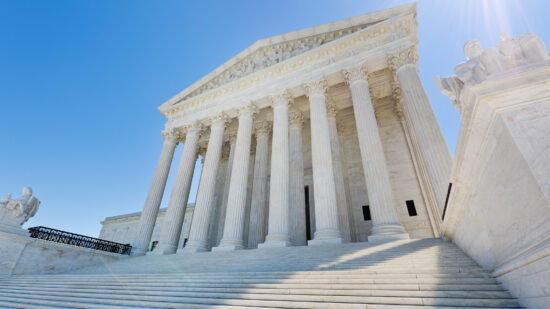
In a unanimous decision issued on June 4, 2026, the Supreme Court handed the Securities and Exchange Commission (SEC) an enforcement victory. That case — Sripetch v. SEC — concluded that the SEC is not required to show a pecuniary loss to investors before the SEC may obtain disgorgement. At the same time, the Court, especially in Justice Clarence Thomas’s concurrence, signaled that further battles may loom ahead over whether disgorgement is a legal (not equitable) remedy and would therefore entitle a defendant to a jury trial.
Background: What Is Disgorgement?
When the SEC catches someone committing a violation of the federal securities laws, it has several remedies at its disposal, including civil penalties, injunctions, and disgorgement. The latter is an equitable remedy that strips wrongdoers of the profits they made through illegal conduct. Unlike damages, which compensate a victim for what they lost, disgorgement focuses on what the defendant gained.
The SEC’s disgorgement power has been shaped by a series of Supreme Court decisions over the past decade, most importantly Liu v. SEC, which confirmed that disgorgement is permissible as an equitable remedy but capped it at the defendant’s net profits and required that it be “awarded for victims.” As we discussed last year, the Court had previously passed on an opportunity to resolve a deepening split among the circuits over whether the SEC must also show that investors suffered financial losses before it could obtain disgorgement. In last week’s decision in Sripetch, the Court finally resolved that issue.
The Question in Sripetch
Ongkaruck Sripetch ran a series of classic “pump and dump” schemes involving at least 20 penny-stock companies. He was criminally convicted and faced a $4.1 million civil disgorgement order from the SEC. In contesting the disgorgement order, Sripetch argued that under Liu, disgorgement must be “awarded for victims.” And further, victims must have suffered a financial loss. Since the SEC couldn’t show that investors lost money as a result of his schemes, Stripetch argued there were no “victims” for disgorgement purposes.
The Ninth Circuit rejected that argument. In so doing, the Ninth Circuit joined the First Circuit in holding that no pecuniary loss was required for the SEC to obtain disgorgement, while the Second Circuit held that such loss was required for disgorgement.
The Supreme Court Affirms
Writing for a unanimous Court, Justice Neil Gorsuch affirmed the Ninth Circuit and ruled against Sripetch. The Court’s holding is straightforward: The SEC does not need to prove that investors suffered a pecuniary loss in order to obtain disgorgement.
In so holding, the Court relied on traditional equitable principles, which have never required a victim to show financial loss as a precondition for disgorgement. Rather, they require only that the defendant wrongfully invaded the victim’s legally protected interests. Justice Gorsuch illustrated the point with historical property cases in which courts ordered defendants to hand over profits from trespasses or unauthorized uses of another’s land, even when the landowner suffered no measurable financial harm. The point of the remedy is to deny the wrongdoer his unjust gain, not to compensate the victim for a loss.
The Court also rejected Sripetch’s argument that Liu‘s description of disgorgement as restoring the “status quo” implicitly required proof of pecuniary loss. When a defendant enriches himself through fraud without leaving investors financially worse off, the Court noted, there are two possible “status quos” to restore — and equity has always preferred the one that strips the wrongdoer of his gains.
Justice Thomas’s Concurrence
The majority opinion left several issues open, one of which was highlighted in Justice Thomas’s concurrence. Justice Thomas agreed with the result but argued that Congress — by expressly codifying the disgorgement remedy after Liu and giving it a statute of limitations separate from other equitable remedies — effectively reclassified disgorgement as a “legal” remedy. If that’s right, the Seventh Amendment would entitle defendants to a jury trial any time the SEC seeks disgorgement. Justice Thomas acknowledged the circuits are already split on the issue, and that the Court will “soon need to address” whether disgorgement is a legal remedy.
Justice Thomas also noted that the SEC collected $6.1 billion in disgorgement orders in 2024 while returning only $345 million to victims. In his view, that practice shows “a fines regime, an inherently legal process,” which implicates the right to a jury trial. Given how often the SEC seeks disgorgement, the practical stakes of whether that remedy requires a jury are significant.
Key Takeaways
- The SEC is not required to show pecuniary losses by investors before it may obtain disgorgement.
- The Liu framework remains intact but has been clarified. Liu‘s requirement that disgorgement be “awarded for victims” does not mean victims must have suffered out-of-pocket losses.
- Justice Thomas’s concurrence argues that post-Liu statutory amendments transformed disgorgement into a legal remedy, triggering Seventh Amendment jury-trial rights. That question is unresolved and likely headed back to the Court in the future.